History
The history of Brown Ale began in England, where the term was first used by London brewers in the late 17th century to describe a lightly hopped ale made from the era's common brown malt, but the style declined significantly in the 18th century as brewers shifted to cheaper, higher-yield pale malts to produce porters and stouts. The style was revived in the late 19th and early 20th centuries, most notably by Manns and Newcastle breweries, leading to the creation of two main English substyles—the sweeter, lower-ABV Southern Brown Ale and the maltier, stronger Northern Brown Ale—before being embraced by the American craft beer movement in the 1980s, which reinterpreted the style with a higher hop presence and generally higher alcohol content.
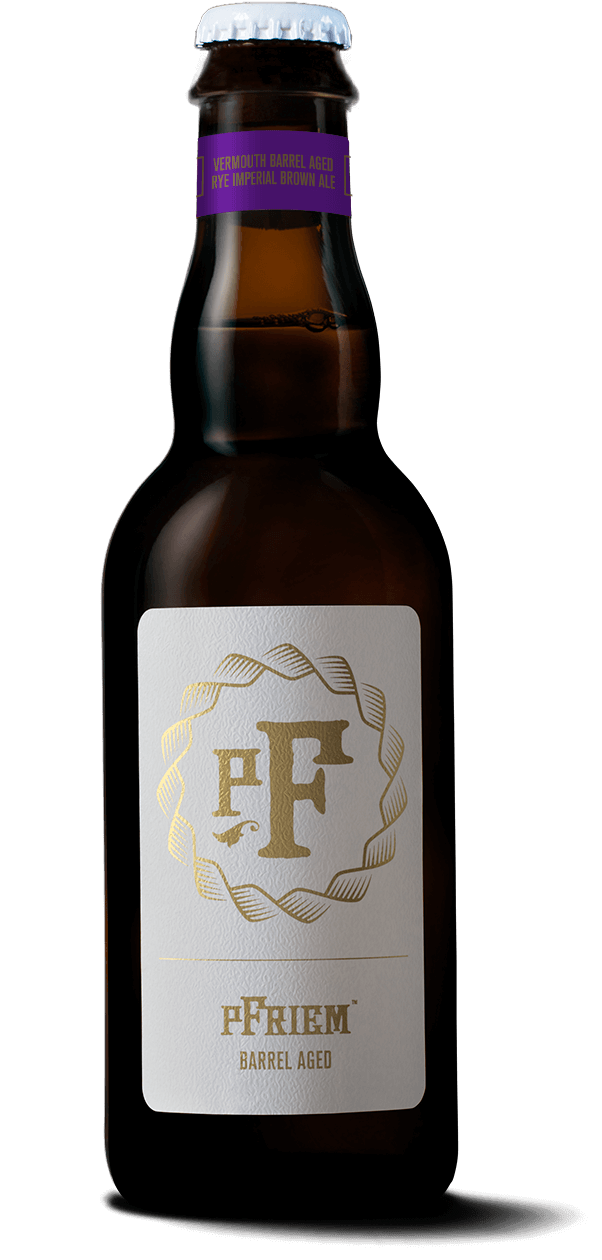
An Imperial Brown Ale lives in a similar realm as an Imperial Stout, but more malt focused, full, strong, and balanced. We use the heritage malt Marris Otter in combination with spicy and herbal rye malt to drive this complex and luscious beer. We then laid it down in sweet red vermouth barrels for 10 months. The combination of fruit, spice and herbaceous qualities of both the vermouth and the rye beautifully complement the toffee, dark chocolate and nougat of the brown ale.
Tasting Notes
Pours a rich black walnut color topped with a creamy tan head of foam. Alluring aromas of dried fig, brandied cherry, herbal botanicals and baking spice. Rich, bold flavors of milk chocolate, burnt toffee, rye bread, dried fruit, and vanilla. Finishes full but with a drying bitterness.
Food Pairings
Rogue Smokey Blue cheese, aged gouda. Braised short ribs, herbed lamb shank. Pecan pie, gingerbread molasses cake.