History
Imperial stout can trace its roots back to 18th century England, where brewers created stouts for export. These beers needed more alcohol and hops to survive long journeys, especially those destined for the Baltic region and Russia. Legend has it that Catherine the Great of Russia became enamored with the beer, solidifying the style's popularity there and earning it the name "Russian Imperial Stout."
The style typically has low to moderate levels of carbonation with huge roasted, chocolate and burnt malt flavors. Suggestions of dark fruit and flavors of higher alcohols are quite evident. Hop character can vary from none, to balanced, to aggressive.
The practice of aging these stouts in bourbon barrels is a recent innovation. Greg Hall of Goose Island Brewery in Chicago is credited with creating the first commercially available bourbon barrel-aged stout, Bourbon County, in 1992. This sparked a barrel aging movement within the craft beer scene, which would see brewers experimenting with many types of casks, spirits and finishes to enhance their beer.
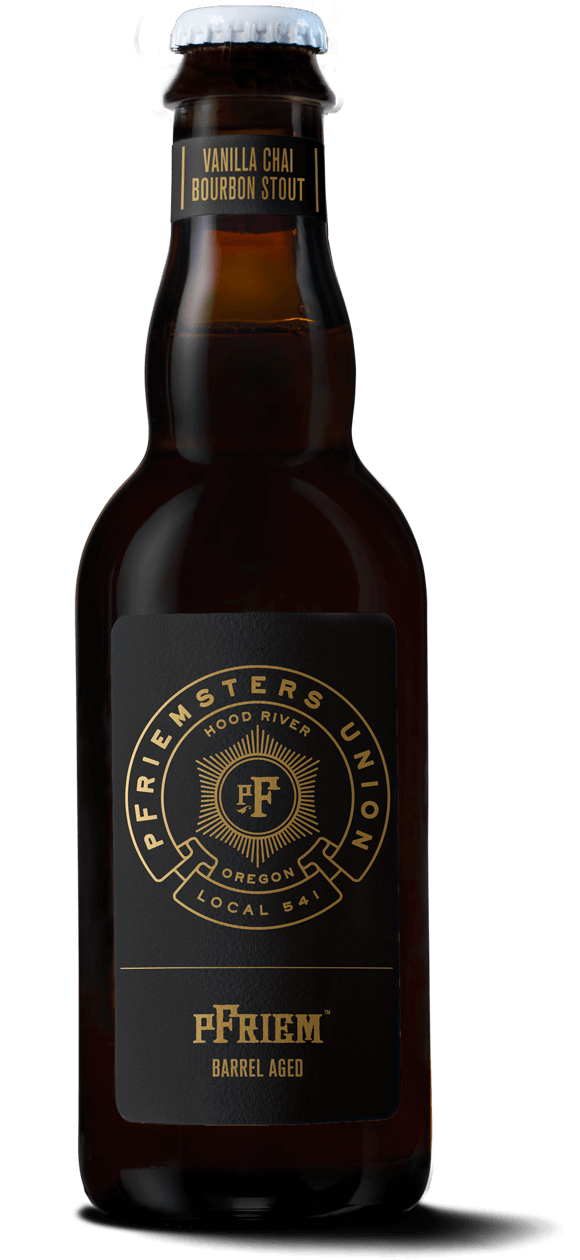
This experimental barrel-aged stout was inspired by the Indian spiced tea, Masala Chai. We began by barrel aging an imperial stout in ex-bourbon casks for over a year. We then created a spice tincture using cardamom, ginger, caraway, cinnamon, nutmeg, black peppercorns, cloves and allspice. After barrel aging, we further rested the beer on vanilla beans and tincture to imbue it with warming spice notes and a silken texture.
Tasting Notes
A dark and enticing brew, pours an inky black with a tan espresso cap of foam. Upon raising the glass, aromas of rich cinnamon, toasted cardamom, a luscious vanilla greet the senses. A sip reveals soft, silky cocoa and roasted coffee, accentuated with peppery spices that linger long after the swallow.
Food Pairings
Spiced nuts, dried fruits and soft goat cheese with honey. Carrot cake, ginger snap cookies, vanilla wafers. Dark chocolate ganache.