History
Imperial stout can trace its roots back to 18th century England, where brewers created stouts for export. These beers needed more alcohol and hops to survive long journeys, especially those destined for the Baltic region and Russia. Legend has it that Catherine the Great of Russia became enamored with the beer, solidifying the style's popularity there and earning it the name "Russian Imperial Stout."
Another sub-style of stout, milk stout, emerged in the UK in the early 1900s as brewers sought to create a more nourishing stout by adding lactose, a milk sugar that doesn't ferment, resulting in a sweeter and creamier beer. It was often marketed for its supposed health benefits. While these claims were later scrutinized, the style persisted, experiencing a revival in the craft beer movement for its unique flavor profile and smooth, often sweet notes of chocolate and coffee, with lactose remaining a key ingredient.
The style typically has low to moderate levels of carbonation with huge roasted, chocolate and burnt malt flavors. Suggestions of dark fruit and flavors of higher alcohols are quite evident. Hop character can vary from none, to balanced, to aggressive.
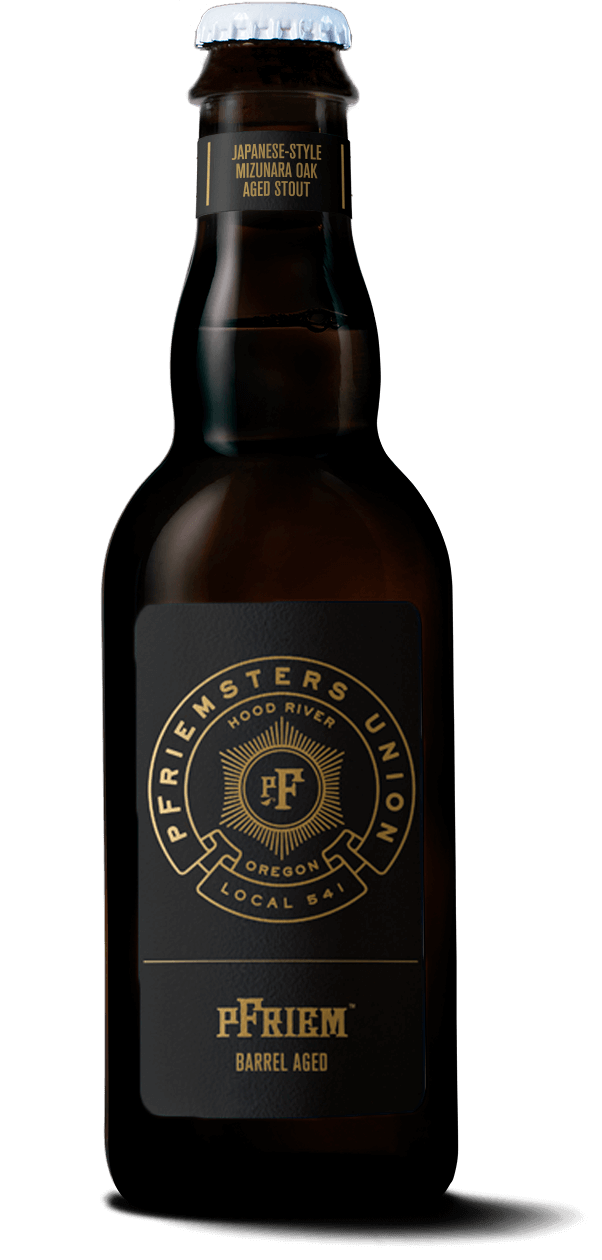
Mizunara oak, a rare Japanese wood, gained prominence for aging whiskey due to limited import options post-WWII, and is now globally sought after for its unique aromatic qualities. Aging with Mizunara imparts distinctive flavors of sandalwood, coconut, and subtle spice, sometimes described as temple incense, setting it apart from American or European oak. While more commonly used in Japanese whiskey production, its use in beer can lend similar nuanced woody and slightly exotic notes, adding complexity beyond traditional oak aging.
Tasting Notes
A thick viscous pour of inky black stout stains the glass, underneath a creamy tan cap of foam. Aromas of rich cacao intertwine with fragrant sandalwood and toasted coconut. A sip reveals a rich and full body, with flavors of bittersweet chocolate, fresh roasted coffee and silky vanilla layering upon an herbaceous woodspice and warming bourbon finish.
Food Pairings
Rich, umami-laden dishes such as grilled salmon with teriyaki glaze or aged cheeses with nutty undertones. Creamy desserts like panna cotta or coconut custard, which complement the wood's sweetness.