In order to understand the history of fruited Lambics, one must first understand the long, rich history of Lambic itself. What we know as Lambic likely evolved slowly from other spontaneously fermented beverages dating back to the ancient inhabitants of the Fertile Crescent. The Romans introduced the use of wooden casks around A.D. 21. Hops were widely accepted as the preferred spice in the 10th century. And a beer that we would likely recognize as Lambic was being lovingly produced in Belgium as early as the 12th century. In order to do so, the brewer, who was often also a farmer, built a mash consisting of 60% malted barley and 40% wheat. A minimum volume of aged hops was added to the boil solely for their preservative properties. Next the wort was transferred to a coolship, a long, wide and shallow vessel, designed, as the name implies, to cool the wort. Brewers would often start early in the morning, in order to have all of the wort in the coolship by nightfall, and therefore take advantage of the cooler evening temperatures. In through the open windows, along with the chilly Belgian breeze, came magic. Soon, the wort began to bubble and foam, the result (we now know) of a mixed culture fermentation beginning. Finally, the slowly fermenting elixir was moved to oak barrels for maturation. The barrel staves harbor lactic acid producing bacteria, which also helps with fermentation and acidifies the beer.
Adding fruit to traditionally produced Lambic is a significantly more recent development in brewing history, and likely began as a cottage industry. In fact, the first explicit mention we find of a cherry addition lies in the 1878 manuscript of tenant farmer Josse De Pauw from Schepdaal, Belgium. He writes: “Take good clear lambic, two years old, at least good tasting, twenty kilograms of good ripe cherries per one hundred litres of lambic. Press the cherries and add the stones (pits). Leave to rest, draw off until December and leave to rest for twenty to thirty days, then bottle, stopper, and lay down.” The fact that this tradition blossomed around the village of Schaarbeek outside Brussels is no accident as the cherries of the same name were once abundant in the area. And while cherries were likely the first fruit to be combined with Lambic, they were certainly not the last. The resultant beers have traditionally been named simply for the fruit included.
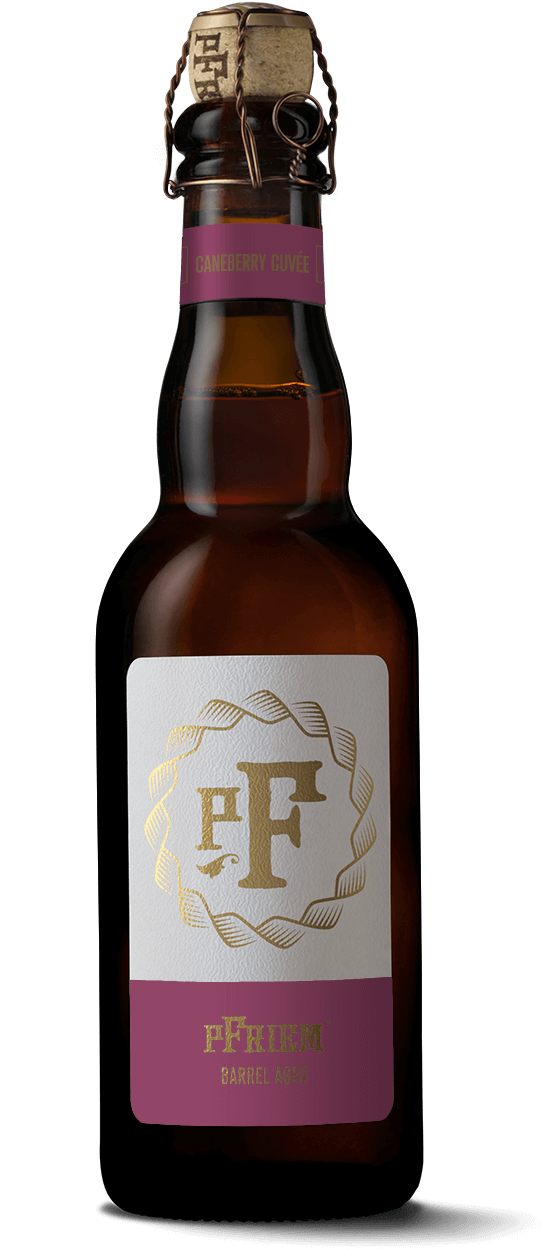
The newest addition to our line of fruited Lambic-inspired ales, Caneberry Cuvée is a sour, barrel-aged ale, matured on a blend of Oregon grown red raspberries, blackberries, marionberries and black cap raspberries. The beer was rested in neutral French oak for 10 months before aging on fruit for 8 weeks. Bottle conditioned for a spritzy effervescence. Enjoy young for the brightest fruit, or age in your cellar to watch the funk evolve.