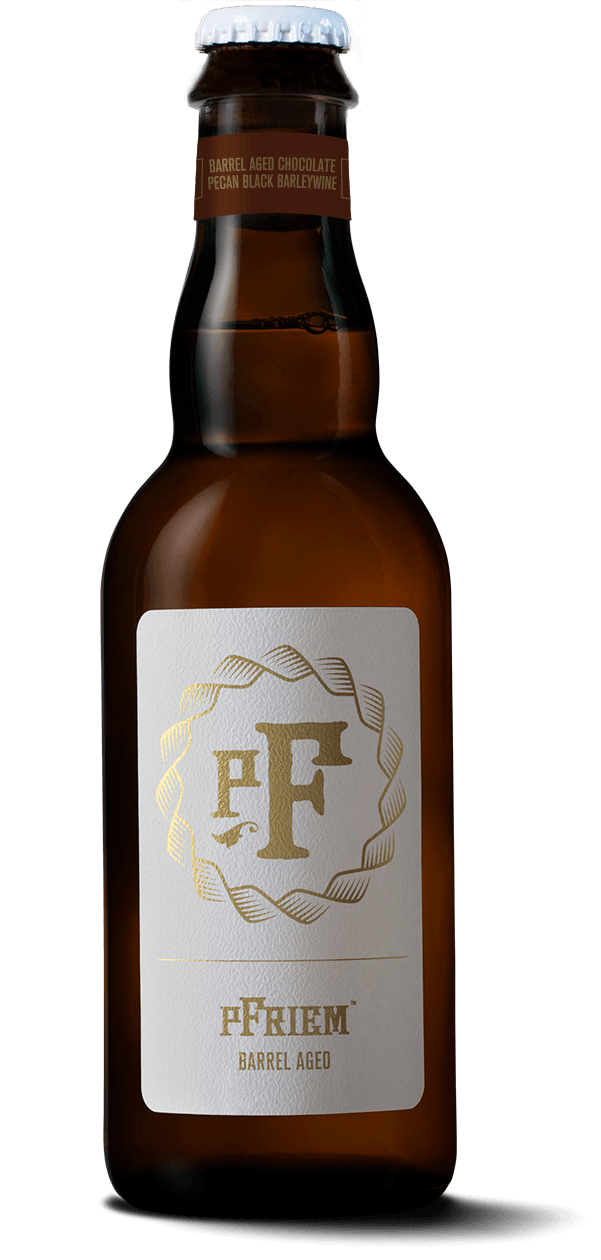
pFriem Barrel Aged Chocolate Pecan Black Barleywine is a blend of our Bourbon Barrel Aged Imperial Stout and Bourbon Barrel Aged Barleywine, so we’ll break down the history of those styles separately.
Barleywine, a potent and complex beer style, has its roots in the 1400s when hops became more widely used in brewing. These strong ales, often aged for extended periods, were initially known by various names like stock ales or winter warmers. The term "barleywine" emerged in the late 19th century, popularized by Bass Brewery's No. 1 Barley Wine. This moniker highlighted the beer's high alcohol content and potential for aging, similar to wine. Barleywines are known for their rich malt character, often showcasing notes of caramel, toffee, and dried fruit. The addition of hops can provide balancing bitterness or contribute fruity and floral aromas. While traditional British barleywines tend to be darker and maltier, American interpretations often lean towards hoppier and more assertive profiles.
The Imperial Stout originated in 18th-century London as a stronger, highly hopped version of porter designed to survive the long, cold voyage to the Russian Imperial Court. It gained fame when Empress Catherine the Great began importing vast quantities from English brewers, who increased the alcohol content to over 10% to prevent the beer from freezing or spoiling in transit. Today, the "Imperial" title remains a tribute to its royal history and its reputation as a bold, high-gravity brew.
The practice of aging these stouts in bourbon barrels is a recent innovation. Greg Hall of Goose Island Brewery in Chicago is credited with creating the first commercially available bourbon barrel-aged stout, Bourbon County, in 1992. This sparked a barrel aging movement within the craft beer scene, which would see brewers experimenting with many types of casks, spirits and finishes to enhance their beer.
pFriem Barrel Aged Chocolate Pecan Black Barleywine is a blend of these styles, creating a beer that exhibits the caramel notes of barleywine and the roasty chocolate characteristics of stout. This project was inspired by the classic confection, the Turtle, a cluster of pecans and caramel, encased in chocolate. After the beers had aged in bourbon barrels for over a year, they were blended and aged in a tank containing roasted cacao nibs from Woodblock Chocolate, demerara sugar, salt and ground pecans. Once imbued with the flavors of the candy, it was racked off the adjuncts, coarse filtered, carbonated and packaged.