The origin of the Imperial Stout begins in 18th-century London, where brewers crafted extra-strong versions of their porters to survive the long, freezing voyage across the Baltic Sea to the Imperial Court of Russia. Catherine the Great was famously enamored with these "Russian Imperial Stouts," which were brewed with high alcohol content and heavy hops to act as natural preservatives. Over time, the style evolved from a functional export to a luxury item, prized for its intense roasted malt profile and velvety texture.
The modern "barrel-aged" evolution was born in the United States in the early 1990s, credited largely to Greg Hall of Goose Island. In 1992, seeking something special for the brewery's 1,000th batch, Hall acquired used Jim Beam barrels and aged an Imperial Stout inside them, creating the first commercial Bourbon Barrel-Aged (BBA) Stout. This sparked a revolution in the craft beer world; as the American palate gravitated toward bolder flavors, brewers began "adjuncting" these stouts with ingredients like cold-brew coffee and vanilla to mimic and enhance the natural charred-oak characteristics of the barrel.
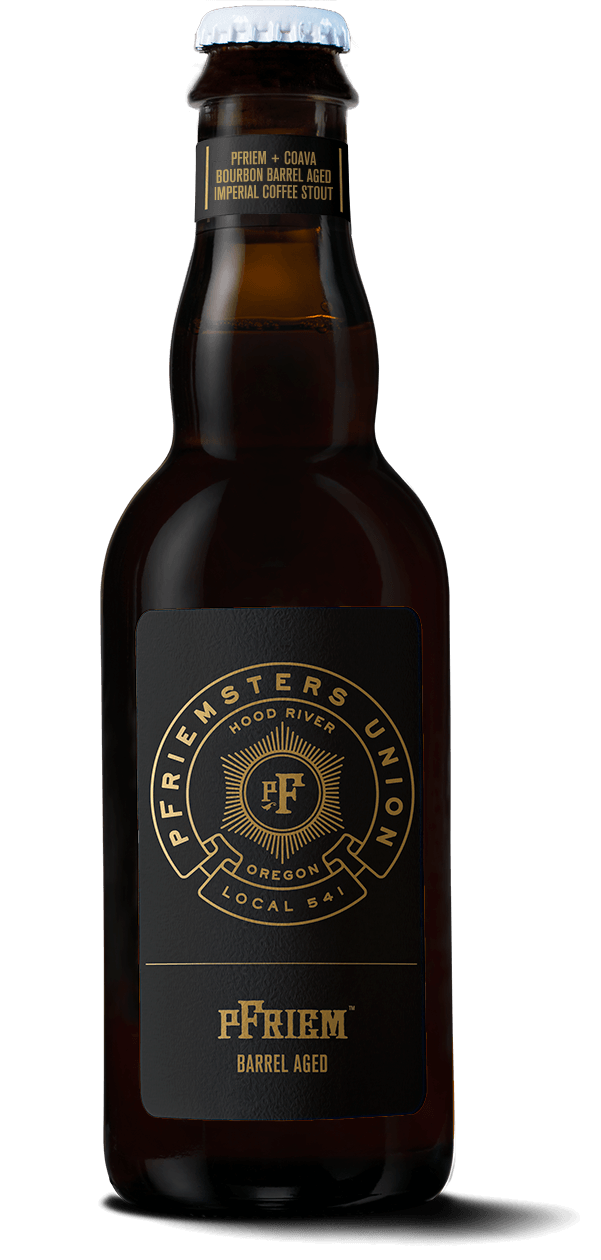
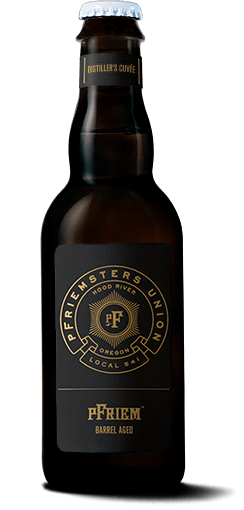
At pFriem, we brew a rich and roasty Imperial Stout that we age in ex-bourbon barrels for a year or more, to imbue them with flavors of spirit and oak. This beer is the flagship of our distiller’s barrel program, and serves as a base for many blending projects and variations.
For this very special variant of our Bourbon Barrel Imperial Stout project, we worked with our good friends and partners at Coava Coffee in Portland, OR. Coava is highly regarded for its focus on single-origin beans and their uncompromising approach to quality through direct-trade partnerships with farmers. Working together, we selected a blend of three varieties of coffee, settled on a complimentary roast profile, and they produced a custom batch for this beer.
After aging for 17 months in Kentucky bourbon barrels, we transferred our imperial stout into a brite tank containing a 50lbs of our custom coffee in whole bean form, achieving a formidable 5lbs/bbl ratio of coffee to beer. We circulated the beer with a pump for 2 full days until achieving our desired flavor profile before racking, carbonating and packaging.
Keep this beer cold, and enjoy it soon, to keep the coffee flavor tasting fresh and vibrant.